
Barrow Neurological Institute
Barrow Neurological Institute is discovering breakthroughs to treat the brain and the mind
Dr. Michael T. Lawton & Dr. Robert Bowser
President and CEO & Chief Scientific Officer
A New Way To Think
Barrow Neurological Institute is discovering breakthroughs to treat the brain and the mind
After performing over 12,000 brain operations over 30 years of work, Barrow Neurological Institute (BNI) President & CEO Dr. Michael T. Lawton isn’t focused only on what the brain does. The crux of his work is centered around how the brain functions as a mind.
“All of us are very familiar with the gifts that we have of being human,” he said. By that, he means how we think, how we move, how we create and sense our environment.

“But if you were to pin any neuroscientist down and say, ‘How exactly is it that we perceive or how is it that we create?’ There are no answers to those questions … to leap from that basic neuroscience understanding to these ideas of philosophy and creativity and intelligence is an enormous leap that we haven't figured out.”
Barrow Neurological Institute in Phoenix gives Dr. Lawton access to technology, resources and data that is driving the force behind this field of study, which he coined mindgenuity.
The Seven Mysteries of the Mind
Dr. Lawton says there are seven mysteries of the mind: movement, perception, emotion, plasticity, memory, intelligence and consciousness. These encompass the majority of cognition within humans.
By better understanding these pillars, Barrow hopes to better understand how the mind works and develop treatments, build new devices and improve care for all.
The movement pillar is where BNI has seen some of its most significant breakthroughs in helping patients who lost much of their independence due to paralysis caused by spinal cord injury, brain trauma, ALS or stroke.
"We were one of the first pioneers in developing biomarkers for this disease"
Neurons in the brain still fire in paralyzed patients, but the signal is blocked before it reaches the muscle, leaving patients immobile. BNI, through partnerships with industry leaders, is using brain-computer interfaces to circumvent that barrier. An implant in the motor cortex reads and decodes signals the brain sends, allowing patients to move a cursor on the screen to communicate using only thought. This has allowed patients to go “from being completely dependent on family and rehabilitation services to having some digital autonomy,” Dr. Lawton said.

In the memory pillar, treatments for epileptic patients have led to more possibilities to study memory and learn about its functions. By better understanding memory and the degeneration of neurons, researchers may be able to make breakthroughs in treatments for neurodegenerative diseases like Alzheimer’s and ALS.
This directly impacts the work of Dr. Robert Bowser, Ph.D., the chief scientific officer, professor and chair of the Translational Neuroscience Department at Barrow.
The Study of Neuroplasticity
Over the last decade, advancements in neuroimaging, identification of cell types in the brain and spinal cord, and the ability to work with brain tissue have given new insights to doctors and researchers seeking development of new therapies.
Barrow is working on novel therapeutics for Parkinson’s disease that may move into human trial in the coming years. Gene therapies are allowing for breakthroughs in identification and treatment of mutations. In Dr. Bowser’s lab, the team is focused on ALS, also known as Lou Gehrig’s disease, in the Gregory W. Fulton ALS & Neuromuscular Disease Center.
“We were one of the first pioneers in developing biomarkers for this disease,” he said.
The center was funded in part through the National Institutes of Health and in part through Ira A. and Mary Lou Fulton, whose son Gregory was treated for ALS at Barrow before he passed away in 2011.
“There was little in the Valley before that, and (the Fultons) wanted to see Phoenix be a hub for ALS research and clinical development,” Dr. Bowser said.
This was the impetus of Dr. Bowser moving to Greater Phoenix in 2011. He brought expertise developed as a student at Yale University, a fellow at Albert Einstein College of Medicine and a faculty member at the University of Pittsburgh School of Medicine, where he helped lead development of an ALS center.
"The innovation here helped Barrow make these breakthroughs and advance in its research"
“It's the most devastating disease that I've seen and really trying to impact the patient care and also facilitate treatment for, for the next generation,” Dr. Bowser said. “I interact and work with a lot with patients [who] know that they're probably doing this very altruistically, because it's not going to help them. It's going to provide us new insights so that hopefully we develop improved drugs for the next generation. … It really hits me hard.”
Behind the work of Dr. Bowser and the team, BNI has grown into one of the top centers in the United States for ALS and neurology.
“The innovation here helped Barrow make these breakthroughs and advance in its research,” Dr. Bowser said. “The neuroscience or the research community here in Greater Phoenix is very interesting and innovative in the sense that we actually collaborate across the Valley. That's not often seen in large metropolitan areas that have a number of academic universities and health care systems present.”
Arizona State University is vital to this collaboration. The university, whose engineering and teaching schools are named after the Fultons, works closely with BNI. Graduate students are part of the design and engineering work at the institute.
The broader manufacturing base within Greater Phoenix has also led to the proliferation of technological advancement in the region. Dr. Lawton, who spent 20 years in the Bay Area, thinks Greater Phoenix has the potential to become an epicenter for biotechnology and bioengineering, backed by the growing manufacturing supply chain and over $300 billion in investment from semiconductor companies.
“We are going to be the silicon capital of America, which I think will be the AI and tech leader of the world,” Dr. Lawton said. “For us to kind of reclaim or to claim the mantle of leadership in this neurotechnology space, I think is an opportunity for us.”
Share this Story
Additional Photos


MORE INNOVATION STORIES
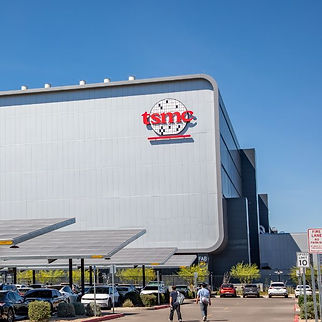
A New Way To Scale
TSMC's $165 billion investment in Arizona is reshaping American manufacturing.

A New Way To Fight Cancer
Precision medicine pioneer Caris Life Sciences added 360,000 human life-years to the planet in 2025.

A New Way To Accelerate
Built on a human-centric approach, Carvana reimagined car-buying to create a first-of-its-kind experience